
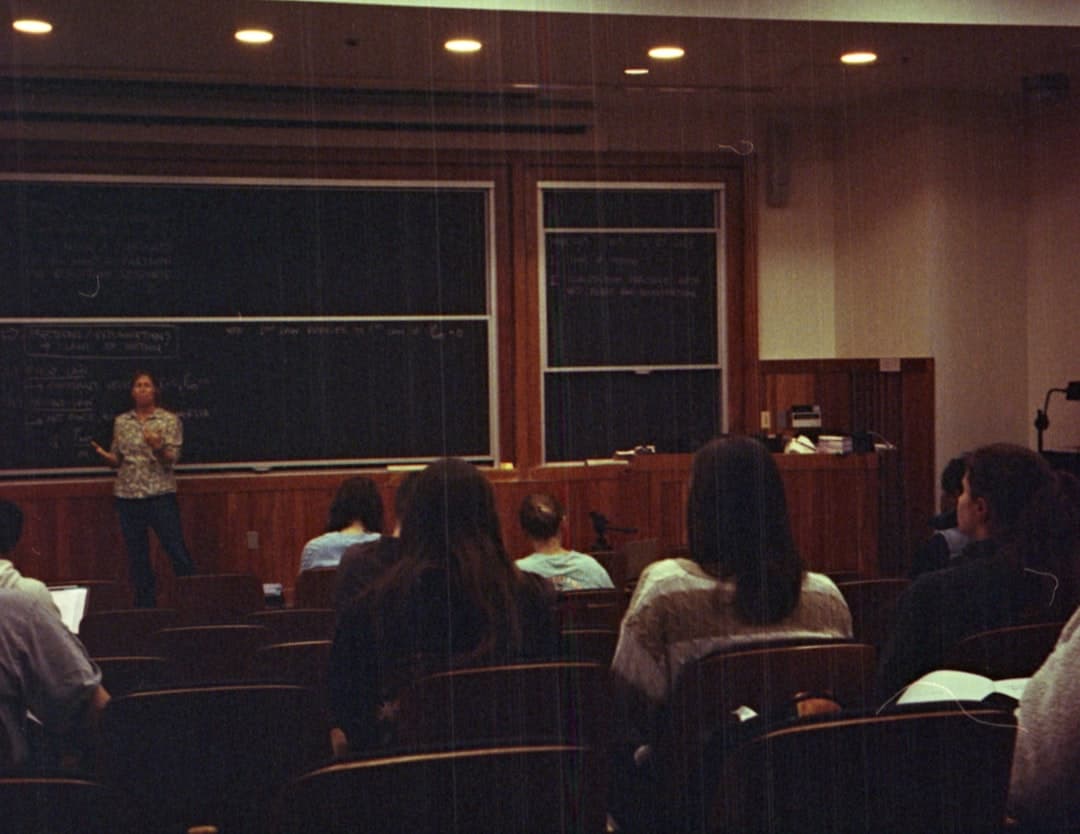
Recording Lectures Tips: The Complete Guide to Capturing Every Class in 2026

Your professor just explained a concept that ties the entire course together. It was brilliant. It was clear. And you have no idea what they said because you were still writing notes from three minutes ago.
This moment happens to every student. The solution isn't faster writing - it's smarter recording. But simply hitting record on your phone isn't enough. Poor audio, dead batteries, and disorganized files can make recordings worthless.
This guide covers everything you need to know about recording lectures effectively. From equipment choices to positioning strategies to AI-powered review techniques, these recording lectures tips will transform how you capture and learn from class.
Quick Navigation
- Why Record Lectures? The Research-Backed Benefits
- Essential Equipment for Lecture Recording
- Positioning and Setup Strategies
- Recording Lectures Tips for Different Class Types
- Organizing Your Lecture Library
- Using AI to Maximize Recording Value
- Legal and Ethical Considerations
- Troubleshooting Common Problems
Why Record Lectures? The Research-Backed Benefits
Before diving into techniques, let's understand why recording lectures works so well for learning.
The Attention Split Problem
Your brain cannot truly multitask. Research from the American Psychological Association shows that switching between tasks - like listening and writing - costs up to 40% of productive time.
When you're scribbling notes, you're not fully processing what's being said. When you're listening intently, you're not capturing details. Recording eliminates this impossible choice.
Revision That Actually Works
A study published in Computers & Education found that students who reviewed recorded lectures scored an average of 8% higher on exams compared to those who didn't.
But here's the key: the benefit comes from reviewing recordings, not just making them. The recording lectures tips in this guide focus on creating recordings you'll actually use.
Accommodating Different Learning Paces
Professors speak at 125-150 words per minute. Some concepts need 30 seconds to sink in. Others need 5 minutes of contemplation. Recordings let you pause, rewind, and absorb at your own pace.
Complex derivations, intricate arguments, and subtle distinctions become much clearer when you can replay them multiple times.
Essential Equipment for Lecture Recording
You don't need expensive gear to capture lectures well. Here's what actually matters:
Smartphone Recording (Free Option)
Your phone is already a capable recording device. The built-in Voice Memos (iPhone) or Recorder app (Android) handles most situations adequately.
Pros:
- No extra cost or equipment
- Always with you
- Simple to use
Cons:
- Battery drain during long lectures
- Average microphone quality
- No AI features built-in
Best For: Students testing whether lecture recording works for them before investing in better solutions.
Dedicated Voice Recorder ($30-100)
Devices like the Sony ICD series or Zoom H1n offer significant audio quality improvements over phones.
Pros:
- Superior microphone sensitivity
- Long battery life (20+ hours)
- Better noise handling
- Dedicated buttons for quick control
Cons:
- Another device to carry
- Manual file transfer required
- No AI transcription
Best For: Students in large lecture halls or noisy environments where phone microphones struggle.
External Microphones ($20-50)
A clip-on lavalier microphone that plugs into your phone dramatically improves audio quality without the bulk of a dedicated recorder.
Pros:
- Affordable upgrade
- Clip it closer to the sound source
- Works with your existing phone
- Some models are wireless
Cons:
- Visible setup might attract attention
- Another item to remember
- Wired versions limit phone placement
Best For: Students who want better quality without multiple devices.
AI-Powered Recording Apps
Apps like SpeakNotes, Otter, or similar tools transform basic recording into intelligent note-taking.
Features to look for:
- Automatic transcription
- Smart summaries
- Searchable content
- Cloud backup
- Organization tools
Our free transcription tool demonstrates how AI transforms raw audio into organized, searchable study material.
Positioning and Setup Strategies
Where you sit and how you position your recording device matters more than the device itself.
The Front Row Advantage
Sitting in the first three rows can improve recording quality by 50-70%. Sound follows the inverse square law - doubling the distance quarters the sound intensity.
| Seating Position | Relative Audio Quality | Background Noise |
|---|---|---|
| Front row | Excellent | Minimal |
| Middle rows | Good | Moderate |
| Back rows | Fair | Significant |
| Near exits/doors | Poor | High |
If front-row seats feel uncomfortable, aim for center-middle. Avoid corners where sound reflects unpredictably.
Device Placement Tips
On the desk: Place your phone or recorder flat on the desk, microphone pointing toward the professor. A small stand or propped-up book can angle it better.
Avoid covering the microphone: Know where your device's microphone is located. Many students accidentally cover it with their hand or notebook.
Minimize vibrations: Hard surfaces transmit every bump and shuffle. Place your device on a soft surface like a notebook or sleeve.
Keep it visible: Hiding your recorder under papers muffles the audio. Keeping it visible also signals transparency to your professor.
Testing Before Important Lectures
Don't discover problems during your midterm review lecture. Do a 60-second test recording in each classroom:
- Record during a quiet moment
- Record while the professor speaks
- Record while students around you shuffle papers
- Play it back - can you hear clearly?
This simple test reveals room acoustics, noise issues, and optimal device positioning before it matters.
Recording Lectures Tips for Different Class Types
Different class formats require different recording strategies.
Large Lecture Halls (100+ Students)
Challenges: Distance from speaker, crowd noise, echo
Solutions:
- Arrive early for front seats
- Consider an external microphone
- Use apps with noise reduction
- Bookmark key moments live (easier to find later)
Small Seminars (10-30 Students)
Challenges: Multiple speakers, discussion format, professor movement
Solutions:
- Central seating captures all voices better
- Apps with speaker identification help
- Record even during discussions - insights emerge from dialogue
- Note who's speaking with timestamps
Labs and Demonstrations
Challenges: Movement, equipment noise, visual content audio can't capture
Solutions:
- Focus on verbal explanations, not ambient sounds
- Supplement with photos of demonstrations
- Ask if professor provides slides or videos
- Note timestamps when visual content is explained
Online Classes
Challenges: Screen recordings, multiple audio sources, technical issues
Solutions:
- Record the screen, not just audio
- Use apps that integrate with Zoom/Teams
- Have a backup recording method
- Check that system audio is captured, not just your microphone
Most video conferencing platforms offer built-in recording, but having your own backup ensures you never lose content due to technical failures.
Organizing Your Lecture Library
A semester generates hundreds of recording hours. Without organization, recordings become a chaotic archive you'll never use.
File Naming System
Adopt a consistent naming convention from day one:
[Date] - [Course] - [Topic]
Examples:
2026-02-09 - BIO301 - Protein Synthesis Mechanisms2026-02-09 - HIST205 - Cold War Origins2026-02-09 - MATH201 - Partial Derivatives
This format sorts chronologically and remains searchable by topic.
Folder Structure
Recordings/
├── Spring 2026/
│   ├── BIO301/
│   │   ├── Lectures/
│   │   ├── Transcripts/
│   │   └── Summaries/
│   ├── HIST205/
│   │   ├── Lectures/
│   │   ├── Transcripts/
│   │   └── Summaries/
Creating this structure at the semester's start takes five minutes. Finding files during finals week becomes effortless.
Tagging and Metadata
Many apps let you add tags to recordings. Use them strategically:
#exam-relevantfor content professors explicitly mention#confusingfor topics needing review#guest-speakerfor special lectures#review-sessionfor pre-exam content
When to Delete
Storage fills up faster than you'd expect. Set deletion rules:
- Delete recordings immediately after exams if you scored well on that material
- Keep recordings from courses in your major longer
- Archive truly valuable lectures to cloud storage
- Be ruthless - keeping everything means finding nothing
Using AI to Maximize Recording Value
Raw recordings are useful. AI-processed recordings are transformative.
Automatic Transcription
Modern AI transcription models like OpenAI's Whisper achieve 95%+ accuracy in clear conditions, processing audio up to 10 times faster than real-time on modern hardware. This converts hours of audio into searchable, skimmable text.
Study applications:
- Search for specific terms across all lectures instantly
- Skim transcripts to identify key concepts
- Copy quotes directly into notes or papers
- Review while commuting (reading is faster than listening)
Our lecture summary tool demonstrates how AI distills long recordings into structured study material.
Smart Summaries
AI can identify main points, definitions, and important moments automatically. Instead of listening to a 90-minute lecture, you review a 3-page summary.
This doesn't replace understanding - it accelerates review. You still need to engage with the material, but AI helps you focus on what matters.
Flashcard Generation
Some AI tools can extract definitions and concepts directly into flashcard format. Combined with spaced repetition apps like Anki, this creates a powerful study system.
Workflow:
- Record lecture
- AI transcribes and identifies key terms
- Export definitions to flashcards
- Review using spaced repetition
What once took hours of manual work happens automatically.
The Search Advantage
This is where AI lecture recordings truly shine. Forgot where your professor explained the difference between mitosis and meiosis? Search "mitosis meiosis" across all biology lectures.
Within seconds, you're listening to exactly that explanation. Compare this to scrubbing through hours of audio or flipping through notebook pages.
Legal and Ethical Considerations
Recording lectures isn't always straightforward legally or ethically. Handle this right from the start.
Getting Permission
Most professors allow recording for personal use. Some don't. Always ask before recording:
Email template:
Hi Professor [Name],
I'm planning to use a recording app to capture lectures for personal study purposes. The recordings will not be shared with anyone. Is this okay with you?
Thanks, [Your name]
Most appreciate the transparency and consent. If they decline, respect that decision.
University Policies
Many institutions have specific policies about lecture recording:
- Some require written permission
- Some prohibit recording entirely
- Some allow recording but prohibit sharing
- Some have different rules for different class types
Check your student handbook or ask the registrar's office. Ignorance isn't an excuse if policies are violated.
Intellectual Property
Lectures are often considered the professor's intellectual property. Recording them for personal use is generally acceptable. Sharing them publicly, selling them, or posting them online is usually not.
Accessibility Accommodations
Students with documented disabilities often have explicit rights to record lectures. If you have accommodations through your disability services office, this typically supersedes individual professor preferences.
Being a Good Citizen
Even with permission, be considerate:
- Don't let recording notifications or sounds disrupt class
- Keep devices out of other students' sight lines
- Don't share recordings without explicit permission
- If the professor asks you to stop, stop immediately
Troubleshooting Common Problems
Even with perfect preparation, problems occur. Here's how to handle common issues:
Poor Audio Quality
Symptoms: Muffled sound, distant professor, overwhelming background noise
Solutions:
- Move closer to the sound source
- Use an external microphone
- Try a different app with noise reduction
- Ask if the professor can wear a lapel mic (some lecture halls have them)
Battery Drain
Symptoms: Phone dies mid-lecture, missing crucial content
Solutions:
- Start class with at least 50% battery
- Bring a portable charger
- Use dedicated recorders with 20+ hour battery life
- Close other apps to reduce drain
Storage Running Out
Symptoms: Recording stops unexpectedly, can't start new recordings
Solutions:
- Check storage before each class
- Delete old files regularly
- Use cloud backup and remove local copies
- Lower recording quality (usually unnecessary, but an option)
Forgetting to Record
Symptoms: Realizing halfway through class you didn't hit record
Solutions:
- Make starting the recording part of your "sit down" routine
- Set a recurring reminder 5 minutes before class
- Use apps that can start recording automatically based on location or time
Transcription Errors
Symptoms: AI misunderstands technical terms, names, or accented speech
Solutions:
- Add custom vocabulary to your transcription app
- Manually correct errors while they're fresh in memory
- Use the audio to verify crucial details
- Note corrections for future reference
Professor Moves Around
Symptoms: Volume fluctuates, words get lost when professor faces away
Solutions:
- Position yourself where professor most frequently faces
- Request they use the room's microphone system if available
- Use multiple recording devices in different positions
- Accept some loss and rely on transcripts for gaps
Building Your Recording Routine
Consistency transforms good intentions into actual results. Here's a sustainable recording workflow:
Before Class (2 minutes)
- Check battery (50%+ minimum)
- Check storage (1GB+ free)
- Create new recording with proper name
- Position device optimally
During Class
- Start recording as professor begins
- Bookmark important moments
- Note timestamps for visual content
- Stay engaged - recording isn't a replacement for attention
After Class (10-15 minutes)
- Stop recording, verify it saved
- Review AI summary or skim transcript
- Add tags and notes while content is fresh
- Move file to proper folder
Weekly Review (30 minutes)
- Review all summaries from the week
- Identify concepts needing deeper review
- Create study materials from transcripts
- Delete recordings you've fully processed
This routine takes minimal time but maximizes recording value.
The Bottom Line
According to the National Center for Education Statistics, there are over 19 million students enrolled in U.S. colleges and universities, and a growing number are incorporating lecture recording into their study habits. Recording lectures effectively isn't about having the fanciest equipment. It's about consistent execution of simple techniques: good positioning, proper organization, and meaningful review.
The students who benefit most from recorded lectures aren't passive collectors of audio. They're active learners who use recordings strategically - to fill gaps, review difficult concepts, and prepare for exams efficiently.
Start simple. Record your next lecture using your phone. Review the recording within 24 hours. Notice what you missed in your notes. Experience that "aha" moment when a confusing concept finally clicks on the third listen.
Then refine your approach. Try better positioning. Experiment with AI transcription. Build organization habits. Each improvement compounds.
Ready to transform how you capture and learn from lectures? Try our free transcription tools and experience the difference between passive recording and intelligent note-taking. Your future self will thank you during finals week.

Jack is a software engineer that has worked at big tech companies and startups. He has a passion for making other's lives easier using software.